Children’s literature,
especially in the early years, is one way for teachers to broach often
difficult or complex subjects with their students. Books allow children to
become immersed in the story, and can begin to connect to the characters and
their experiences. I believe that books are a powerful tool that can bring
people together, and can make messages more meaningful to the reader. There are
going to be students in your class who may say “That’s not fair! Why does
_______ get to use that chair?”, and the list goes on. It is important that, as part of your
classroom community, this is a topic that you address right away. Discussing
the topic of equity in a safe environment, such as your classroom, is a time
where your students can ask questions, and you can begin to dispel the myths
that some students are getting special treatment, etc. Much like other challenging
concepts, this is one where literature can act as a way to approach the
concept, and allow students to share their own thoughts and expand their own
ideas.
Below, I have provided some
wonderful texts that you could use in your classroom to introduce the concept
of inclusion with students:
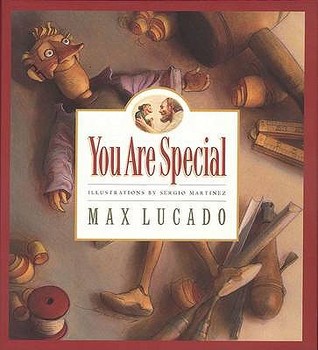
1. “You Are Special”, by Max Lucado – this is a heartwarming story that
spreads the message that no matter what we look like on the outside, we were
all created equally, and that who we are on the inside is what should be
valued. It discusses the topic of labelling, using stars and dots, as a way
that the characters in the story are categorized by people in their society.
This is a positive book that asks children to remember that they are all
special in their own way, and would support a discussion on diversity,
acceptance, and inclusion. It could also be used to discuss social justice, in
terms of hierarchies in society, and how man-made and irrelevant these truly
are.
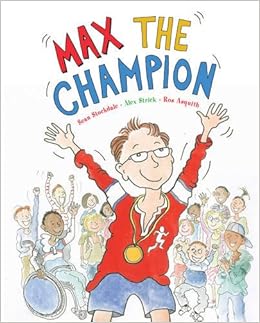 2. “Max
the Champion”, by Sean Stockdale – Max loves to play sports, and through
this love, the story explores how Max, and other children with a range of
disabilities are able to participate actively with their peers during all
activities. This book does a brilliant job of showing us what inclusion really
means, and that the interests and passions of a child should not be shut down
because of their disability. Max and his friends are role models for what an
inclusive school environment should be.
2. “Max
the Champion”, by Sean Stockdale – Max loves to play sports, and through
this love, the story explores how Max, and other children with a range of
disabilities are able to participate actively with their peers during all
activities. This book does a brilliant job of showing us what inclusion really
means, and that the interests and passions of a child should not be shut down
because of their disability. Max and his friends are role models for what an
inclusive school environment should be. 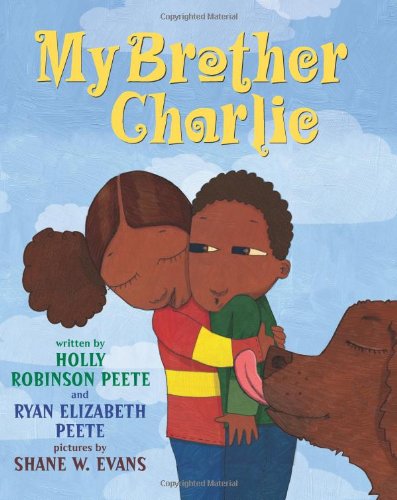
3. “My Brother Charlie”, by Holly Robinson Peete – this story discusses
what it is like to live with autism, through the eyes of a child. The main
character is Charlie’s sister, and she explains to readers what wonderful
things her brother CAN do, and how he may show emotions or feelings differently
from others. This is a great text in that it is through the eyes and words of a
child, and can allow students to see the value in others, and to look beyond
their own perception.
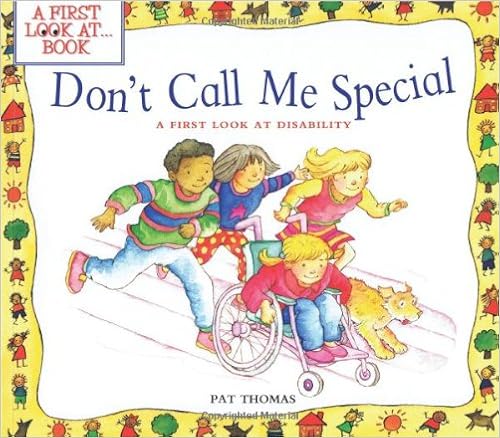 4. “Don’t Call Me Special”, by Pat Thomas – this book, geared towards
Kindergarten-Grade 2, is a great way to begin looking at how far we have come
in terms of including those with disabilities. It discusses different types of
disabilities, and how the use of the word ‘special’ was used in a negative or
segregating way. It illustrates to readers that some people may have
disabilities and look differently on the outside, but that on the inside, we
all have our own wants, needs, and feelings – that is something we all
share.
4. “Don’t Call Me Special”, by Pat Thomas – this book, geared towards
Kindergarten-Grade 2, is a great way to begin looking at how far we have come
in terms of including those with disabilities. It discusses different types of
disabilities, and how the use of the word ‘special’ was used in a negative or
segregating way. It illustrates to readers that some people may have
disabilities and look differently on the outside, but that on the inside, we
all have our own wants, needs, and feelings – that is something we all
share.  5. “The Great Big Book of Families”, by Mary Hoffman – this would be a
wonderful introductory book in Grade 1, All About Me, or a Kindergarten
classroom, as it shows readers what all kinds of families can look like. It is
inclusive in that it shows various family structures that differ from the
‘nuclear family’ norm, as well as other cultures and family practices. It is
text that you could use to go in many different directions, and allows students
to see themselves and their families represented and celebrated.
5. “The Great Big Book of Families”, by Mary Hoffman – this would be a
wonderful introductory book in Grade 1, All About Me, or a Kindergarten
classroom, as it shows readers what all kinds of families can look like. It is
inclusive in that it shows various family structures that differ from the
‘nuclear family’ norm, as well as other cultures and family practices. It is
text that you could use to go in many different directions, and allows students
to see themselves and their families represented and celebrated. 
Hi Alexis,
ReplyDeleteI love the idea of providing Inclusive Literature to your students! As early years teachers, we know that children enjoy reading stories and can often relate their own experiences to those told through books. You've provided some fantastic resources here, I'd love to add some of these to my own classroom library! Thank you!