Thursday, 18 February 2016

"Isn't (Accessibility) Lovely..."

This post is going to be short, but sweet…

It was a Monday night, and the Grammys were on. I typically do not watch these televised events, however, I am glad that I did.

Stevie Wonder, and Pentatonix, presented the award for song of the year. In his speech, Wonder brought inclusion and accessibility to everyone’s attention on a global stage. 

"I just want to say before saying the winner that we need to make every single thing accessible to every single person with a disability.”

When I heard this I stopped – what a powerful way to remind people of such an important issue. His commanding presence offered food for thought, that I hope people watching can begin to process and relate to their own lives. It is somewhat disappointing that it takes a celebrity to bring awareness to these issues, but I am glad when they do so in a genuine way. 

In terms of teaching, this is a prevlent issue, and one that is becoming part of every day dialogue in terms of our students and the accessibility of our schools. And even with something as simple as reading an award show card, there are barriers that exist on a daily basis for individuals.

UDL brings this to the forefront, and demonstrates that it is possible to benefit the whole, when you consider the needs of EVERYONE!


** The video clip starts at :40

Saturday, 6 February 2016

FASD and Supportive Classroom Practices

Throughout my teaching journey, I know that I will meet many incredible and talented individuals. Children that come from different backgrounds, and who have different life experiences than myself. UDL and inclusion are concepts and approaches that can support classroom diversity in its many forms.

FASD is something that is prevalent in society, but can often go undetected and unacknowledged due to its social stigma. When I use the term ‘FASD’, I am using it as a general term to describe a range of effects that are the result of a mother who drank alcohol during her pregnancy. The effects of this exist on a spectrum, and include physical, mental, behavioural, and learning disabilities, depending on when or how much alcohol was consumed. FASD is also known as the ‘invisible’ disability, because it largely goes unnoticed or misdiagnosed. It is important for teachers to be aware of this so that they are knowledgeable and can better support students in their class.  A child with FASD has permanent brain damage, most often to their executive functions, which cannot be reversed. 

Things can become problematic when teachers try to ‘fix’ these behaviours, where their time would be better spent finding ways to accommodate these children by creating supports and establishing strong relationships that they can take with them beyond your classroom. Showing compassion and respect through words and actions puts the child first, and recognizes that they have challenges, but that you are there to support them as a child like any other – they are not a problem to be ‘fixed’.

I sound like a broken record at this point, but the basic principle of UDL applies even here! “What is essential for some, works for all”.

Lutherwood” is a not-for-profit organization, based in Ontario, which focuses on health and social service initiatives. Through their website, they provide a concise guideline for educators that gives 8 “keys” to follow when teaching a child with FASD. I will provide a link to their website below, but the 8 strategies are as follows:

1.     Concrete
- Speak in clear terms; no idioms; use clear instruction and language.

2.    Consistency
- Maintain consistent language and expectations as best you can between home and school.

3.    Repetition
- Short term memory is a concern, concepts may need to be re-taught or pre-taught for a student to be successful.

4.    Routine
- Having consistent and stable routines will help to decrease their anxiety, and allow them to be present.

5.    Simplicity
- Children with FASD can become easily overwhelmed and over-stimulated, so it is important that you keep instruction and your classroom environment as straightforward and simple as possible.  

6.    Specific
- Say EXACTLY what you mean. No ambiguity, be direct in your expectations, activities, and instruction.

7.    Structure
- Scaffolding and structure are imperative so that the child can succeed and feel supported.

8.    Supervision
- Constant support and supervision are necessary because of the cognitive challenges children with FASD face. ‘Simple’ tasks or social interactions may not come easily, and should be nurtured through your presence.   


These guidelines are applicable to any child in your classroom. There are some points that are specific to children with FASD, however, there are many other instances where keeping these points in mind would benefit your instruction and your student's learning. I personally have not worked with a child with FASD, and some of this may seem overwhelming, but if you can remember one simple fact, then teaching ANY child can start off on the right foot: they crave connections! Allowing them to have a level of interdependence, not independence, gives them a safe space to ask questions, communicate emotions, and work cooperatively to the best of their ability.

Building those relationships is a crucial step, and being a supportive, understanding, and comforting person in their lives will do them more good then you’ll ever know. The best thing you can do for a child in your class that faces these challenges is to, instead of being overwhelmed and afraid of it, educate yourself so that you can better understand what THEY are experiencing so that you can be there for THEM. I have attended a few professional development sessions about FASD, and they have been extremely eye-opening, and if you ever have an opportunity to attend a session, TAKE IT! The more you learn, the better you can support your students.


“Eight Magic Keys”
http://www.fasdwaterlooregion.ca/sites/default/files/file/EightMagicKeysBroch.pdf

Lutherwood, “Learn About FASD”
http://www.fasdwaterlooregion.ca/about-fasd

Tuesday, 2 February 2016

Technology in a UDL Classroom

It is logical that through my exploration of UDL that technology would play a prominent role in its applications. Technology is an extremely broad term that covers a wide range of devices and mediums. 

The three key types of technology are:

1) Mainstream Technology (iPad’s, laptops, cameras, smart phones)
2) Instructional Technology or Educational Technology (SMART Board, document reader)
3) Assistive Technology (hearing aids/cochlear implants, braille materials)

I want to preface this by saying that, while technology is a dynamic support for a UDL classroom, it does not MAKE a classroom UDL. It is merely a tool, and should be used as such. You will find some situations where using a traditional method (i.e. Pen to paper) is more efficient, and sometimes, it is the only option. In a school or division where there is limited access to high end technology, there are still mediums you can use to support learning in your classroom.

Assistive technology can assist students with daily functions and movements, as well as sensory access so that they are able to learn and actively participate. This form of technology IS essential for students inside and outside of the classroom.

During one of my teaching experiences, the school I was in had a select number of iPads for each classroom, in addition to SMART Boards and document readers (combination of mainstream and instructional technology). The document reader is a great way to present material so that students throughout the room can see it. If you were to do a read aloud, you could place the book on the reader, and the image would be projected on a screen. Some document readers can even be connected to SMART Boards. This tool benefits ALL, not just the few.

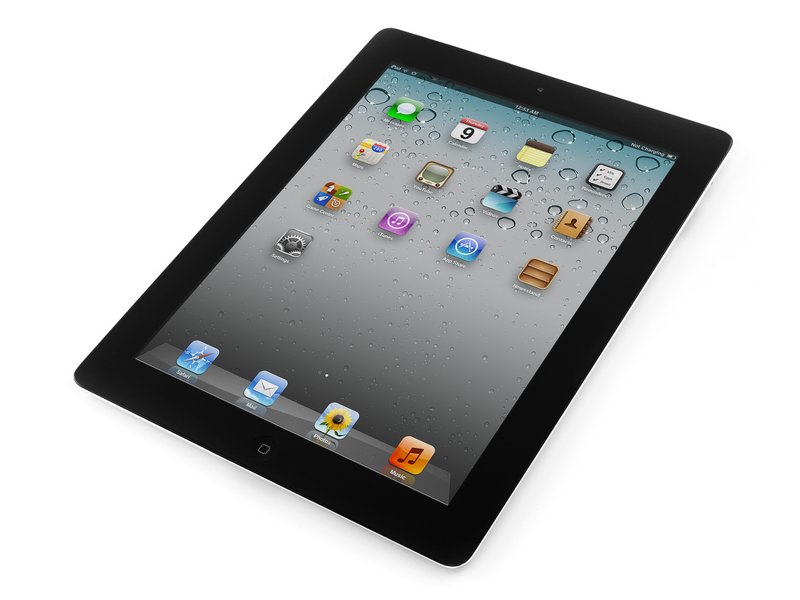
IPads are a helpful resource that you can utlizie to reach a world of information at your fingertips. It proved very useful during one of our social studies explorations where research was a large component. IPad’s also have other capabilities such a voice recording, which you could use as a medium for assessment, for students who may be unable to write, but are able to convey the same knowledge through speech. This is not to say that supporting and working on printing are unimportant, but in a subject, say science, where the content knowledge is the priority, recording a child explaining a concept to you could make all the difference. It provides an additional way for children to convey information to you, and you can in turn take that information and use it as assessment for, as, or of their learning.

Through the use of iPad’s there are a variety of apps that can support a UDL classroom environment: math apps, visual/writing/research support apps, and alternatives to writing. Below I have included a link to a great website that offers apps under these categories that can be used in your classroom!

Another form of technology that can be used as a support in a UDL classroom is a microphone collar/necklace. This is something I had access to during my student teaching, and was impressed by how it not only helps you communicate with students, but how it supports my style of teaching. I don’t like to yell. I have a teacher voice, but I don’t feel as though shouting at students gets, or holds, their attention. With the microphone, if the noise level in the room got a little higher than normal, you can still speak at a calming and comfortable level, but your voice is amplified for you. It saved my voice! You simply wear it around your neck, much like a necklace, but be sure to take it off when you’re not in the classroom! There are also other variations that can clip or hook on to your clothing. This is something that I know I will be incorporating into my classroom!

Even though there were no students in my class with any perceived hearing concerns, it was still used and benefited from. If you do have a student with hearing disabilities, it serves the same function of making sure that your voice is being heard by all of your students in a clear and calm way. This captures the essence of what UDL stands for. While these microphones may be designed to support those with perceived disabilities, they in fact benefit the whole.

Below the app link, I have provided a link to a resource that has a wide range of tools for different classroom needs (literacy, reading, research, etc.) each themed link can be followed to another page that has a wide variety of resources! Check it out!