Saturday, 12 March 2016

Assessment... Where, When and Why?

As our society progresses and diversifies, it is important that our institutions follow suit. Education is, in my opinion of course, the backbone of any society, and it should be our job then to engage in new ways of thinking, experiment with pedagogy, and reach beyond norms. Despite this, I have found education to often times become deadlocked in that regard. We are often the least progressive, in terms of assessment, and this is not solely the fault of the profession. External influences such as parents, politics, and finances play a large role in how our public education system is received and delivered. And there is absolutely nothing wrong with that, however, there tends to be a clash between 'traditional' notions of assessment, and those that, through my educational journey I've found value in, are deemed more 'progressive'.

It is a shift of norms that is slowly occurring, but one that does so with great debate and opinion. As I studied UDL concepts and practices this year, I found myself pulled towards Dr. Jennifer Katz's book time and time again. "Teaching to Diversity" is a text that I highly encourage everyone to read, as it has not only given me a greater insight into UDL practices and theory, but it also put into words the thoughts and pedagogical beliefs that I had difficulty expressing succinctly up until my final year in education.

There are many encouraging and positive things that Katz shares in her text, and I'd like to share some of the ones I found powerful in terms of reflecting on assessment. Maybe they'll help you when you go for an interview, or when you're planning for the upcoming school year. Professional development is essential in this regard, so that we can always be evolving and learning as teachers. This is what drew me to the profession - I love learning!

1. "I want the best for my kids, so I strive to make the system work for them" (Katz, 145)

2. "We must give kids a chance to show, through their strengths, what they know." (Katz, 145)

3. "If we continue to give marks at stages, throughout the unit and average them, we have contradicted ourselves - why should a mark from two weeks into the unit count for the same amount as a mark at the end of a unit? We are not marking the student because we haven't taught the full unit yet. We are marking the work of last year's teacher, or of their parents, in other words, we are marking their background knowledge and cultural capital. We are punishing the kids who came into the unit with less background knowledge and skills than others did. This is not inclusive education." (Katz, 149)

4. "I believe the purpose of reporting, whether formal or informal, is to involve and empower students and their families in their education. It is not meant to punish students, or weed them out." (Katz, 152)

5. [Negative report card comments] "You will never improve a student's behaviour by causing them conflict at home. That only increases a student's anger, stress, and cortisol levels." (Katz, 152-153)

When I read these, I had an 'Ah Ha!" moment. This demonstrates that not only is UDL a plausible solution, but that our 'norms' and current ways of thinking are potentially disenfranchising students. And for the people who say "Well the real world is hard, and they have to learn!", that's true, being a functioning member of society is hard, but it is even harder if you are not given to knowledge, skills, and values that can help you. This means empowering them, and giving them the tools so that they can become independent people, and can maneuver the difficult times to the best of their ability. School should be a safe space, where children feel they can try new things, and make mistakes. It is OUR job to be there to guide them, and pick them up, or show them a new way of looking at the world. These skills, values, and tools, are what will stay with students throughout their lives.

In a UDL classroom, which should truly be every classroom, it is important that assessment is ongoing. This means striking a balance between assessment for, as, and of learning.

Assessment FOR learning is your opportunity to get to know your students, and this in turn guides your own teaching. Creating class profiles is something that Katz suggests, and is something that I will absolutely be implementing in my classroom. For each student/discipline, there is a checklist with outcomes/etc. and as you go, check off the students who are "exceed" or "fully meets" expectations (Katz, 146.) The blank spaces you will then have tell you who or where you need to focus your instruction, and help you to spot patterns. This is a great tool for report card writing!

Another method I have seen is using a journal and post-it notes. Each page has a student’s name, and as you circulate and observe or meet with students, you can jot down an observation on the post-in and put it on the student’s page. Now you have an authentic place to create report card comments which are constructive and accurate. Even if you assign a group project, or an inquiry-based activity, this is still a time for assessment.

Essentially...

Circulated observations + final product (assessment of) = LOTS OF DATA!

You now have a much better indication of how a child is doing, where they may need more support, and their progress. 

Assessment AS learning is an equally important process, that being because this directly involves your students in the assessment process. This process requires student reflection, and self-assessment, and sets the groundwork for being self-reflective learners in the future. It also gives them a sense of ownership over their learning, and that ownership can engage and empower them.

When I taught fairy tales in ELA, the students were going to create their own fairy tale, and publish them. We had been reading fairy tales, and doing various activities throughout the unit, and this was the final project. When I told my students about this, I asked them what they thought needed to be in a fairy tale. After some great conversations, we created a list, or rubric if you will, of things that their stories needed to have. I of course slid in some of my own guidelines, but I wanted them to be a part of creating their rubrics so that they knew what they would be assessed on. This gave them a goal, and a place to constantly refer back to throughout their writing process. Introducing a rubric at the end doesn't give time to be reflective. If they made a mistake, or missed a step, that was ok, I want them to learn from these mistakes. Having them write a test, and get the answers wrong doesn't help them learn from their mistakes, because that test likely will never be revisited again. But having them meet with me, and self-assess throughout the process allows them that opportunity to grow and expand their knowledge.

Assessment OF learning is the most 'traditional', and "the most controversial part of assessment in UDL" (Katz, 149). Quotes 3-5 above touch on why assessment of learning can be problematic. Essentially, grading students mid-way through is not an accurate representation of their learning. Learning is a process, and your reporting of it needs to be reflective and cognisant of that. Your job is to track this progress, and use it to inform your assessment, and do so in conjunction with graded materials at the end of the unit. These two methods of reporting, TOGETHER, will be a more authentic view of each student, and serve as a better assessment. If you assess a child using final unit outcomes half-way through, then almost every child will fall short.

In terms of the parent-child-teacher relationship and reporting, as referenced in quote 5, you need that relationship to be a strong, supportive, and goal oriented one. These goals can be set and communicated through assessment, if done in a meaningful way. Katz suggested, having the students write comments, alongside the teacher, on report cards. This would look different depending on the age group, but I've seen this type of self-assessment done as early as grade 1. Beside the outcome or subject, have the student write a response to their learning, and afterwards you would write your own. This is also an interesting way to see how that child views themselves and their own learning. You may have nothing but praise for that child, but if they do not see it in themselves, then this type of exercise will make that visible to you, and their parents. Assessment is constant, and it is not only for curriculum content. As teachers we are constantly assessing how students are doing emotionally, mentally, physically, etc. We truly are a full-service job!

Something that I have heard used as assessment of learning, in a UDL classroom, is that during testing, such as in math, science, or social studies, give students the option to orally tell you what they know. This alludes to Katz's second quote about allowing students to show what they know through their strengths. This does not mean that you stop developing the skills they have difficulty with, but in subject where the content is what is being assessed, then why does it matter if it is an audio-recorded conversation/questions between you and the students, or if it is a written test? I personally had test anxiety as a child, and no matter how much I studied, my tests would not reflect what I actually knew. And the type of testing (multiple choice, short/long answer) is another area that can either help a child express their learning, or, hinder and confuse them.

That's an entirely different soap box I could get on, but I'll leave it at this for now....

If I could summarize assessment using only a few words, it would be these: authentic, continuous, meaningful, supportive, reflective, and empowering.

If you try and keep these in mind when reflecting on your own approach to assessment, then you are well on your way to creating a UDL classroom!


Katz, Jennifer. 2012. Teaching to Diversity: The Three-Block Model of Universal Design for Learning. Winnipeg, Manitoba: Portage and Main Press


Wednesday, 9 March 2016

A Paradigm Shift: To Sit or Not To Sit?

Something that is a pervasive concern for teachers is student engagement and adaptability for all. Having students complete their work, or listen to instruction, are often concerns for all students, not only those with behavioural needs. I have seen certain approaches work effectively, and is something that can be used to help increase attention span and learning opportunities for students: adaptable/movement seating. 

Sensory/movement seating as well as different levels of seating.
As illustrated in the picture, this type of seating allows students to continue moving while they work, and for many students, this movement helps them focus (Schimke, 2013). Not only are there movement seating options (swivel stools, large balls, etc.) but also non-seating options. As seen in the second image, students are working standing up at an elevated surface. This is yet another option when designing your classroom space. Not all students are able to work effectively sitting in a chair in front of a desk.


It is important than when you design your space that it is conducive to large group, small group, and individual learning, to the best of your abilities. I am fully aware that furniture in a classroom is expensive, and often we are working with older materials that were left behind by teachers past, but it is important for all schools, not just individual teachers, to start thinking about how the environment of their classroom/school impacts accessibility and learning. I personally believe that it is important to have these options available for students, so that they are able to make the most of their learning. Think about it as an adult, I know when I do I realize that I like to spread out when I work, on the floor. Studies have shown that classroom chairs in fact have negative effects on student’s back health (Merritt, 13). To me this is yet another push to dispel the ‘traditional’ classroom environment.

In terms of sensory inclusion, through my research, I came across 2 sensory types that I had never heard of before. The journal I retrieved them from states them as such:

"Most caregivers and teachers of young children are familiar with a child’s five senses, but they may not be aware that there are two additional senses: the proprioceptive and vestibular senses (Lynch & Simpson, 2004). Proprioceptive sensors are found in joints and tendons and send information to the brain about the positioning of each body part. Vestibular sensors are found in the inner ear and send information to the brain about balance and how the body is positioned in relation to the environment. The body and brain work together using all seven of these senses to take in information and process it……. This process encompasses how the brain organizes and responds to sensory input". (Merritt, 14)

Ok, so it’s a lengthy description, but it gave me an eye opening perspective of what sensory processing truly is. There are parts of our body that must operate in unison in order to most effectively process information. For students, teachers, and parents, this is very important to understand, and I feel very few people do – including myself, up until this point. This research supports the idea that sensory integration is a natural part of how we learn and develop. Even as infants, this is how we learn – why would we expect that to stop?

Here are some suggestions for classroom activities that utilize these two senses and why they are an important part of child development.

Vestibular

Why is this important in the classroom?

Children who have an underdeveloped vestibular system have difficult reacting to information about movement, gravity, balance, and space. They may either be oversensitive or under sensitive to these things….. Also delays in speech, language motor skills, or academic achievement are often apparent”. (Learning Through the Senses)

Classroom Activities:

  • During the day provide a variety of calming activities for the whole class.
  • Place a rocking chair in a quiet area and allow children to slowly rock calming effect.
  • Give the child an appropriate object to squeeze to settle down   tactile inputs can assist to calm the child.
·         Make sure there are times when stimulation is limited as some children may over react.

Proprioception

Why is this important in your classroom?

Children with low proprioception may be restless in the classroom. They may also be clumsy and trip over tables and chairs. They may swing between furniture and be unable to accept physical boundaries. There may be an unusual need to have close physical contact but they may also avoid teams sports an wont enjoy close eye activities. They may also have difficult grasping mathematical concepts. “(Learning Through the Senses)

Classroom Activities:
·         Use media to pull and work hands and fingers through materials such as putty, play dough, clay or rubber bands.
·         Use activities that encourage children to push, pull or carry heavy loads.
·         Use stress balls.
·         Give them a box of beans to submerge their arms in to find objects.
·         Provide large pillows and mats for burrowing into.
·         Wearing heavy bag or weighted pack.

For students in your class who have difficulty with attention span or sitting still, they are not the problem. Their brains and bodies are trying to process so much information, and use ALL SEVEN of their senses. Their need to explore these senses as they learn is not supported in ‘traditional’ classroom set-ups. Moveable seating is one way in which you can begin to assist all learners in your classroom. Instead of viewing them as a distraction, try and see where their attention, or lack thereof, could be coming from.  These types of seating arrangements have proven successful for children with ADHD and autism, and would not doubt benefit other learners in your classroom as well.
And as illustrated in the second image, having various ways of working in the classroom can help you support all types of learners in your classroom.

You may be worried, “If I try this my classroom will be chaos!” and it very well may be – with the wrong attitude. It is important that your students understand the concept of equity, and that you treat these options as simply that – options. They are not a privilege, something to be taken away or given, they are tools for learning.


Merritt, Jill. (2014). Alternative Seating for Young Children: Effects on Learning. American International Journal of Contemporary Research. Vol. 4 No. 1. Retrieved from

Schimke, Ann. (2013). Students stand, balance and bounce to learn. Chalkbeat, Colorado. Retrieved from

Learning Through the Senses: Sensory Development in the Classroom for 5-8 year olds. Retrieved from


Thursday, 3 March 2016

Inclusive Literature for Children

Children’s literature, especially in the early years, is one way for teachers to broach often difficult or complex subjects with their students. Books allow children to become immersed in the story, and can begin to connect to the characters and their experiences. I believe that books are a powerful tool that can bring people together, and can make messages more meaningful to the reader. There are going to be students in your class who may say “That’s not fair! Why does _______ get to use that chair?”, and the list goes on.  It is important that, as part of your classroom community, this is a topic that you address right away. Discussing the topic of equity in a safe environment, such as your classroom, is a time where your students can ask questions, and you can begin to dispel the myths that some students are getting special treatment, etc. Much like other challenging concepts, this is one where literature can act as a way to approach the concept, and allow students to share their own thoughts and expand their own ideas.

Below, I have provided some wonderful texts that you could use in your classroom to introduce the concept of inclusion with students:

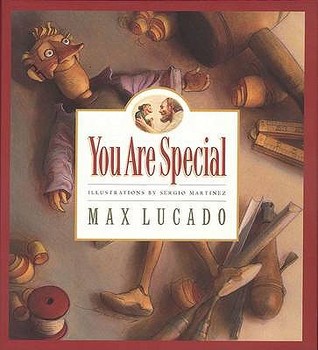
1. You Are Special”, by Max Lucado – this is a heartwarming story that spreads the message that no matter what we look like on the outside, we were all created equally, and that who we are on the inside is what should be valued. It discusses the topic of labelling, using stars and dots, as a way that the characters in the story are categorized by people in their society. This is a positive book that asks children to remember that they are all special in their own way, and would support a discussion on diversity, acceptance, and inclusion. It could also be used to discuss social justice, in terms of hierarchies in society, and how man-made and irrelevant these truly are.

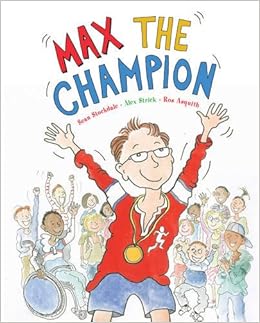
 2. Max the Champion”, by Sean Stockdale – Max loves to play sports, and through this love, the story explores how Max, and other children with a range of disabilities are able to participate actively with their peers during all activities. This book does a brilliant job of showing us what inclusion really means, and that the interests and passions of a child should not be shut down because of their disability. Max and his friends are role models for what an inclusive school environment should be.

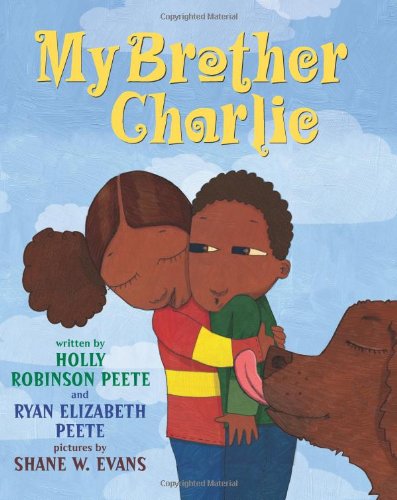
3. My Brother Charlie, by Holly Robinson Peete – this story discusses what it is like to live with autism, through the eyes of a child. The main character is Charlie’s sister, and she explains to readers what wonderful things her brother CAN do, and how he may show emotions or feelings differently from others. This is a great text in that it is through the eyes and words of a child, and can allow students to see the value in others, and to look beyond their own perception.

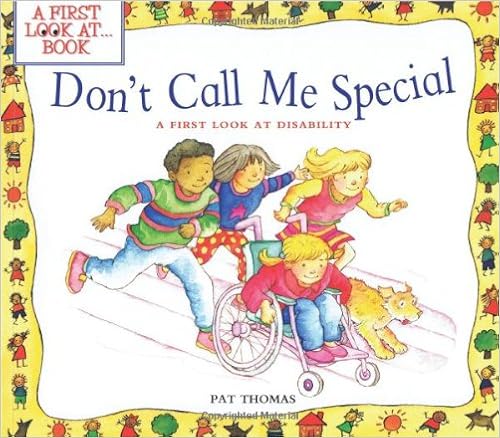
4. Don’t Call Me Special, by Pat Thomas – this book, geared towards Kindergarten-Grade 2, is a great way to begin looking at how far we have come in terms of including those with disabilities. It discusses different types of disabilities, and how the use of the word ‘special’ was used in a negative or segregating way. It illustrates to readers that some people may have disabilities and look differently on the outside, but that on the inside, we all have our own wants, needs, and feelings – that is something we all share. 


5.The Great Big Book of Families, by Mary Hoffman – this would be a wonderful introductory book in Grade 1, All About Me, or a Kindergarten classroom, as it shows readers what all kinds of families can look like. It is inclusive in that it shows various family structures that differ from the ‘nuclear family’ norm, as well as other cultures and family practices. It is text that you could use to go in many different directions, and allows students to see themselves and their families represented and celebrated.